


Breaker Box Basics: What to Know About Your Electrical Panel
A breaker box—also known as an electrical panel, service panel, or load center—is the heart of your home's electrical system and where all electricity flows through. This unassuming metal box quietly controls and distributes the power that keeps your lights on, your appliances humming, and your devices charged. Understanding what an electrical panel does, the different names you might hear, and the types available can help you stay safe, plan upgrades, and troubleshoot common issues. Here's what you need to know about electrical panels and how they power every corner of your home.
An electrical panel is the central distribution point where electricity from your utility company enters your home and is divided into individual circuits. It regulates how much power flows to each room or appliance and protects your home by shutting off electricity if a circuit is overloaded.
Types of Panels
- Main Breaker Panel – The most common type, this panel includes a built-in main breaker that can shut off power to the entire home in one switch.
- Main Lug Panel – Lacks a main breaker and is typically used when there's a separate main disconnect elsewhere.
- Sub-Panel – An auxiliary panel that feeds power to a specific area, such as a garage or addition, when extra circuits are needed.
- Transfer Switch – Connects a backup generator to your home, allowing you to switch safely between utility and generator power during outages.
- Single- or Three-Phase – Most homes use single-phase power, which provides the standard 120/240 volts. Larger buildings or workshops may require three-phase power to handle heavier electrical loads.
The electrical panel is the homeowner's property and is responsible for its maintenance and safety. Panels are typically located in a basement, utility room, garage, or on an exterior wall where the main power line enters the house.
Inside every electrical panel is an organized system of parts that safely manages power flow:
Key Parts:
- Main Bus Bars – Heavy metal strips that distribute electricity from the main breaker to each individual circuit breaker.
- Neutral Bus Bar – Provides a return path for current back to the utility.
- Grounding Bus Bar – Routes stray electricity safely into the ground to prevent shocks or fires.
- Spaces – Empty slots where additional circuit breakers can be installed if you need more circuits in the future.
- Wiring – This includes the hot, neutral, and ground wires that feed each circuit and connect back to their respective bus bars.
Types of Circuit Breakers
- Single-Pole – The most common, protecting one 120-volt circuit.
- Double-Pole – Handles 240-volt circuits, often for large appliances like dryers or ovens.
- Arc-Fault Interrupters (AFCI) – Detect dangerous arcing conditions that can start fires.
- Combination Breakers – Provide both overload protection and arc-fault detection.
- Ground-Fault Circuit Interrupters (GFCI) – These devices shut off power quickly if they detect a ground fault. They are ideal for kitchens, bathrooms, and outdoor circuits.
- Dual-Function Breakers – Combine both arc-fault and ground-fault protection in one device.
Understanding these components and breaker types can help you plan upgrades or discuss electrical work knowledgeably with a licensed electrician.
The amperage rating of your electrical panel tells you how much electricity your home can safely handle at one time. Most modern homes have panels rated between 100 and 200 amps, but older houses may have 60-amp panels that can't keep up with today's appliances and electronics. If your home's demand for electricity exceeds the panel's rating, you risk overloaded circuits, frequent breaker trips, and potential fire hazards.
When to Consider an Upgrade
You might need to replace or upgrade your panel if you notice:
- Flickering lights or frequently tripped circuits – Signs that your system is struggling to meet power needs.
- Age of 20 to 40 years – Panels eventually wear out, and older designs may not meet current safety codes.
- Less than 100 amps – Insufficient for most modern households, especially if you plan to add new appliances or devices.
- New high-demand equipment – Installing an electric vehicle (EV) charger, heat pump, or other large appliance can require a higher amperage service.
- Burn marks or excessive heat – If the panel feels hot or shows scorch marks, turn off power and call an electrician immediately. This can indicate serious electrical faults that need urgent attention.
Monitoring amperage and understanding when to upgrade protects your home from power interruptions and keeps your electrical system safe and efficient.
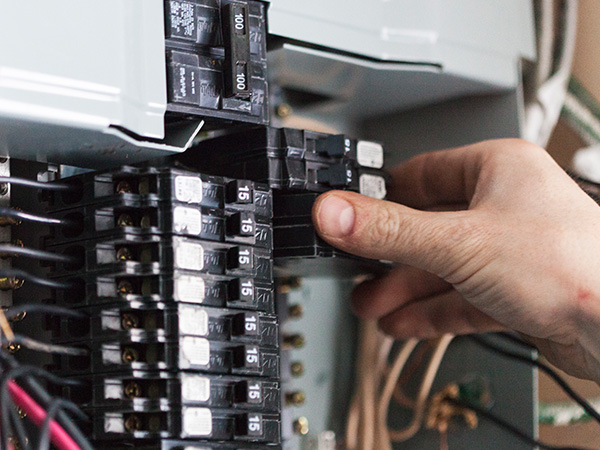
While an electrical panel is designed to protect your home, it still carries high-voltage power that demands caution.
When it's Safe to Touch
It's generally safe to open the panel door and flip circuit breakers on or off with dry hands, but only if you're standing on a dry surface and not touching any exposed wiring. If you see moisture, scorch marks, or hear buzzing, stop and call an electrician instead.
Avoid Service Wires and Lugs
Inside the panel, thick service wires and the large lugs they connect to are always live—even if you turn off the main breaker. Never touch them, as they carry electricity directly from the utility line.
Main Breaker Limitations
The main breaker can cut power to all household circuits, but it does not stop the current coming from the utility into those service wires. Only a licensed electrician should perform repairs or upgrades inside the panel.
Use the Right Tools
If you need to tighten a breaker screw or replace a cover plate, use tools with insulated, non-metal grips to reduce shock risk. Avoid metal jewelry and keep one hand behind your back while working to limit potential current paths through your body.
Respecting these safety rules keeps routine tasks, like resetting a tripped breaker, low-risk while protecting you from dangerous shocks.
Your breaker box or electrical panel is the heartbeat of your home's electrical system, and understanding how it works helps you keep everything running safely and efficiently. When it's time for routine maintenance, an upgrade, or even a full replacement, McCoy's has what you need to keep the power on. From quality electrical parts to expert advice, McCoy's is your go-to source for supplies and guidance to ensure your home stays powered and protected.

Reviewed by Evan Spencer
McCoy's In-House Expert