


Does Caulk Expire and Other Clean-Out Questions Answered
Whether you' re wondering "does caulk expire?" or how long paint lasts in a can, we have your guide to your next spring clean or a garage clean-out. Many DIY products don' t last forever, and using materials past their prime can lead to failed repairs, wasted time, or even damage to your home. Taking a few minutes to check expiration dates and product condition, using our tips now can help ensure your next project goes smoothly and delivers lasting results.
DIY and Building Supplies Don't Last Forever
DIY and building supplies don't last forever, especially when they're stored in garages or sheds where temperature swings are common. Heat, cold, moisture, and air exposure can all break down products over time, while worn or damaged packaging seals allow materials to dry out or separate. Using expired supplies comes with risks, including poor sealing or adhesion, uneven paint finishes, and repairs that need to be redone — ultimately costing more time and money.
Does Caulk Expire?
Yes — caulk has a shelf life. Most caulk lasts 12-24 months unopened, depending on the type and storage conditions.
How Long Caulk Lasts
- Latex caulk: shorter lifespan
- Silicone caulk: typically lasts longer
- Opened more than 1 year ago
- Stored in a hot garage or shed
- The expiration date is missing or unreadable
Signs Caulk Has Gone Bad
- Hard or lumpy texture
- Separation inside the tube
- Difficult to squeeze out
- Poor adhesion or uneven application
How Long Does Paint Last in a Can?
Paint can last for years if stored properly, but its lifespan depends on the type of paint and whether the can has been opened.
Average Paint Shelf Life
- Latex paint: 5-10 years when unopened and sealed well
- Water-based paint: up to 10 years under stable conditions
- Oil-based paint: 10-15 years due to a more durable formula
- Opened cans: shorter lifespan because air exposure slowly breaks down the paint
Signs Paint Has Gone Bad
- Sour or rotten smell when the lid is opened
- Chunky texture that doesn't smooth out after stirring
- Permanent separation between liquid and solids
- Poor coverage, streaking, or uneven finish during a test patch
How paint is stored plays a major role in how long it lasts:
- Extreme heat can cause paint to thicken or dry out faster
- Freezing temperatures permanently damage paint chemistry, making it unusable even after thawing
- Rusted or dented lids prevent an airtight seal, allowing air and moisture inside
- Improper sealing leads to "skinning," where a dried layer forms on top of the paint

Quick tip: Store paint indoors in a climate-controlled space and seal lids tightly with a rubber mallet to extend shelf life.
Other Items to Toss During a Garage Clean-Out
Caulk and paint aren't the only materials with a limited lifespan. While you're cleaning, check these common DIY supplies and replace anything past its prime.
Adhesives and Glues
- Wood glue: lasts about 1-2 years
- Construction adhesive:
- 2+ years unopened
- About 1 year once opened
- Super glue:
- 1-2 years unopened
- Only a few months after opening
Old adhesives may look fine, but they often lose bonding strength, leading to failed repairs.
Sealants and Foams
- Expanding spay foam: very short lifespan once opened - often only a few weeks
- Grout and mortar mixes: absorb moisture over time
- Cement grout: about 6 months
- Epoxy grout: up to 2 years
If powder products feel hardened or clumpy, they should be discarded.
Paint Supplies and Finishes
- Paint brushes: replace when bristles are worn, frayed, or won't clean completely, since they won't produce a smooth finish
- Wood stains:
- Oil-based stain: 3-5 years unopened, 1-3 years opened
- Water-based stain: 2-3 years unopened, about 1 year opened
- Gel stain: 2-3 years unopened, 1-2 years opened
Safety Items to Replace
- Batteries: discard dried-out batteries and check expiration dates on rechargeables
- Respirator filters: replace after about 1 year, even if unused, as filter materials break down over time
- Fire extinguishers: replace expired units - and if you don't have one in your home or garage, now is the time to add one
Regularly replacing these items helps ensure your tools work properly and your projects - and home - stay safe.
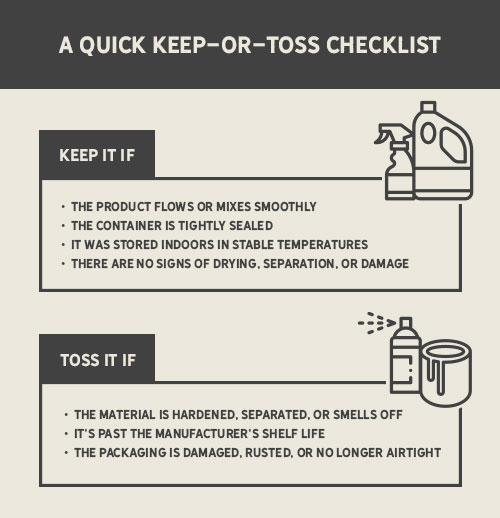
A Quick Keep-or-Toss Checklist
Not sure what stays and what goes? Use this simple checklist while cleaning out your garage or workshop.
Keep it if:
- The product flows or mixes smoothly
- The container is tightly sealed
- It was stored indoors in stable temperatures
- There are no signs of drying, separation, or damage
Toss it if:
- The material is hardened, separated, or smells off
- It's past the manufacturer's shelf life
- The packaging is damaged, rusted, or no longer airtight
When in doubt, replacing questionable materials is usually cheaper than redoing a repair later.
How to Store DIY Supplies So They Last Longer
Proper storage can significantly extend the life of your leftover project materials and help you get more use out of them.
- Avoid freezing or extreme heat. Store supplies in a climate-controlled space whenever possible, rather than in a garage or shed exposed to temperature swings.
- Keep containers upright and tightly sealed to prevent leaks, air exposure, and drying.
- Wrap caulk tips tightly with plastic wrap or foil before replacing the cap to slow curing inside the tube.
- Store paint upside down briefly after sealing to help create an airtight lid seal and reduce air entry.
- Label purchase or open date on containers with a marker so you know how old the materials are before starting your next project
A few simple storage habits can help supplies last longer and reduce waste during future clean-outs.
Clean Out Now to Prevent Problems Later
Taking the time to clean out expired or worn DIY supplies now can save you headaches - and money - later. Fresh, properly stored materials mean better repairs, smoother finishes, and projects that last longer. A quick annual garage or workshop clean-out is a small effort that pays off in time, cost, and safety.
Ready to restock for your next project? Check out our full selection of high-quality caulk, paint, adhesives, and more to make sure your home repairs go off without a hitch.